This last week has been full of bad news and sickness. Our whole family came down with some kind of a virus that hit my kids with asthma pretty hard. And now it looks as if the hubby may have some kind of secondary throat infection. Just as everything seemed to be coming together with our Ecology field project, bad news kept coming and coming.
First, I found out that today's class was cancelled because my professor's husband had passed away from cancer. Then, my sister called to let me know my great-nephew had been diagnosed with Cerebral Palsey, and that he had suffered a stroke in-uetero. I can't imagine what my niece and her husband are going through, but I have been to the ER multiple times with all 3 of our kids that each suffer from a chronic illness, and I know all the tests and results can be exhausting.
Then I went to a urologist today to find out why I have recurring bilateral kidney stones, and found out that it is probably some kind of metabolic disease. So they gave me a list of foods that I'm supposed to avoid which really conflicts with my low-cholesterol diet. I am proof that small people who exercise can inheirit high cholesterol, so it really is important to get that yearly physical. I had to make another appointment with my regular doctor just to figure out what to eat. For now, I'm drinking lots of water, but I have to avoid all black tea, chocolate, nuts, berries and ground pepper. Those are in my top 10 favorite foods!
There was some great news this week, as I mentioned above, my Ecology group is getting a big help from the DNR! One of my neighbors is a Forester for the agency, and has set me up with GIS maps of our study areas, and official DNR guides. She is also planning on coming with us on Saturday, and bringing her GPS for detailed mapping. One of the sites she helped me select has a beaver dam in a lake, that has created a dry path dividing the lake, and the water level on each side is higher than the trail. I can't wait to get pictures of that!
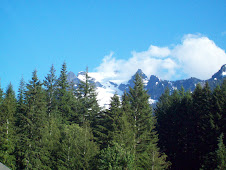
A bit of my view...
Thursday, October 15, 2009


Thursday, October 8, 2009
America's Big Problem with Food
America’s Big Diet Problem
Abstract:
It is obvious that with the growing waistlines of Americans, their diet must be changed, if not for health reasons, then to reduce their carbon footprint. According to Christopher Weber and H. Scott Matthews of Carnegie-Mellon University, cutting red meat and dairy out of the diet one day a week can reduce a family’s household greenhouse gas footprint by about 4%. This is almost equivalent to obtaining 100 percent of their foods from local sources. Even food writer Michael Pollan has declared that if Americans combined a white-meat and vegetable diet with local food purchasing it would be equal to taking 30-40 million cars off of road for a year.
Cattle Facts:
According to the study, transportation emissions from the distribution of meat and dairy only account for less than 5 percent of their total emissions. To quantify it, John’s Hopkins research has shown that it takes 40 calories of fossil fuels to produce 1 calorie of beef, which also includes fertilizer application for growing cattle feed. However, Methane and Nitrous Oxide emissions that occur with beef and dairy production are far more potent greenhouse gasses than the Carbon Dioxide that is emitted during shipping and feed production.
Many environmentalists argue that grass fed cattle are better for the Earth than grain fed cattle, due to the reduced acreage needed to produce grasses versus grains, but studies have found that ruminant gasses emitted from grass fed cattle are higher in methane. Manure management also increases the greenhouse footprint of cattle production, as many farmers may pile it or reuse it on the feed field where it is free to emit the biogases. The discarded manure is also bleached into the soil where it can pollute ground water or streams.
Diet Change Facts:
The Carnegie-Mellon study broke down a diet change to its equivalent of greenhouse gas mileage reduction, and came up with the following results. If Americans would purchase 100% local, it would be equivalent to reducing their driving emissions by 1,000 miles per year. If they were to change their diet just one night a week from red meat to white meat it would reduce their miles by 760. A one night a week change from red meat to all vegetables would reduce their miles by 1,160. If red meat and dairy were given up completely, or switched to a completely vegan diet, miles would be reduced by 5,340 and 8,100 miles respectively.
A reduction in red meat and dairy in the diet can also be healthier for consumers. A John’s Hopkins study has shown that diets abundant in red meat significantly increase the risk of digestive cancers. It also found that about two-thirds of Americans are obese and that a low-meat diet or a vegetarian diet will decrease body weight and body mass index along with reducing the risk of cardiovascular disease and Type II Diabetes.
Conscientious Eating:
For those Americans who love their red meat and cheese or for those who can’t afford to change their diet, there are technologies some farms are using to reduce their own greenhouse gas footprint. According to the EPA, about 110 anaerobic manure digesters are being used on dairy farms across the nation with about another 70 under construction. These digesters combine the cattle waste with bacteria to drive methane-powered generators. They produce enough energy to power about 350 homes, and since they make the farms completely energy independent, they usually pay for themselves within 5 years. Other smaller farms are sealing their manure in bins and collecting the methane gas to use for heat.
The Carnegie-Mellon study found that shipping accounts for 11% of the greenhouse gas emissions from fruits and vegetables. Vegetarians can almost eliminate this footprint with buying from local greenhouse farmers. According to the British Colombia Greenhouse Growers Association, greenhouses use only 0.01% of B.C.’s total farmland while growing 11% of B.C.’s total agriculture production. If this amount of produce was grown in a field it would require 5,436 acres. The greenhouses in British Columbia also use Integrated Pest Management practices, or good bugs eating bad bugs, zero herbicides, collect and recycle rain water, and computerized hydroponic bags to ensure no more chemicals are used than what is necessary for nutrients.
With all of the abundant land available for growing and a thriving international trade business, America has not incorporated much greenhouse technology into its agricultural economy. If it was used more widely, Americans could buy local, sustainable produce 10 months out of the year and reduce their carbon footprint even more. Until then, they should cut their consumption of red meat and dairy considerably. They should also pressure legislatures to provide more incentive for sustainable cattle and vegetable farming and promote public awareness campaigns such as “Meatless Mondays.”
Abstract:
It is obvious that with the growing waistlines of Americans, their diet must be changed, if not for health reasons, then to reduce their carbon footprint. According to Christopher Weber and H. Scott Matthews of Carnegie-Mellon University, cutting red meat and dairy out of the diet one day a week can reduce a family’s household greenhouse gas footprint by about 4%. This is almost equivalent to obtaining 100 percent of their foods from local sources. Even food writer Michael Pollan has declared that if Americans combined a white-meat and vegetable diet with local food purchasing it would be equal to taking 30-40 million cars off of road for a year.
Cattle Facts:
According to the study, transportation emissions from the distribution of meat and dairy only account for less than 5 percent of their total emissions. To quantify it, John’s Hopkins research has shown that it takes 40 calories of fossil fuels to produce 1 calorie of beef, which also includes fertilizer application for growing cattle feed. However, Methane and Nitrous Oxide emissions that occur with beef and dairy production are far more potent greenhouse gasses than the Carbon Dioxide that is emitted during shipping and feed production.
Many environmentalists argue that grass fed cattle are better for the Earth than grain fed cattle, due to the reduced acreage needed to produce grasses versus grains, but studies have found that ruminant gasses emitted from grass fed cattle are higher in methane. Manure management also increases the greenhouse footprint of cattle production, as many farmers may pile it or reuse it on the feed field where it is free to emit the biogases. The discarded manure is also bleached into the soil where it can pollute ground water or streams.
Diet Change Facts:
The Carnegie-Mellon study broke down a diet change to its equivalent of greenhouse gas mileage reduction, and came up with the following results. If Americans would purchase 100% local, it would be equivalent to reducing their driving emissions by 1,000 miles per year. If they were to change their diet just one night a week from red meat to white meat it would reduce their miles by 760. A one night a week change from red meat to all vegetables would reduce their miles by 1,160. If red meat and dairy were given up completely, or switched to a completely vegan diet, miles would be reduced by 5,340 and 8,100 miles respectively.
A reduction in red meat and dairy in the diet can also be healthier for consumers. A John’s Hopkins study has shown that diets abundant in red meat significantly increase the risk of digestive cancers. It also found that about two-thirds of Americans are obese and that a low-meat diet or a vegetarian diet will decrease body weight and body mass index along with reducing the risk of cardiovascular disease and Type II Diabetes.
Conscientious Eating:
For those Americans who love their red meat and cheese or for those who can’t afford to change their diet, there are technologies some farms are using to reduce their own greenhouse gas footprint. According to the EPA, about 110 anaerobic manure digesters are being used on dairy farms across the nation with about another 70 under construction. These digesters combine the cattle waste with bacteria to drive methane-powered generators. They produce enough energy to power about 350 homes, and since they make the farms completely energy independent, they usually pay for themselves within 5 years. Other smaller farms are sealing their manure in bins and collecting the methane gas to use for heat.
The Carnegie-Mellon study found that shipping accounts for 11% of the greenhouse gas emissions from fruits and vegetables. Vegetarians can almost eliminate this footprint with buying from local greenhouse farmers. According to the British Colombia Greenhouse Growers Association, greenhouses use only 0.01% of B.C.’s total farmland while growing 11% of B.C.’s total agriculture production. If this amount of produce was grown in a field it would require 5,436 acres. The greenhouses in British Columbia also use Integrated Pest Management practices, or good bugs eating bad bugs, zero herbicides, collect and recycle rain water, and computerized hydroponic bags to ensure no more chemicals are used than what is necessary for nutrients.
With all of the abundant land available for growing and a thriving international trade business, America has not incorporated much greenhouse technology into its agricultural economy. If it was used more widely, Americans could buy local, sustainable produce 10 months out of the year and reduce their carbon footprint even more. Until then, they should cut their consumption of red meat and dairy considerably. They should also pressure legislatures to provide more incentive for sustainable cattle and vegetable farming and promote public awareness campaigns such as “Meatless Mondays.”
Thursday, October 1, 2009
Seattle Plastic Bag Ban Can Cause More Problems Than It Solves
Incentives not Taxes
Abstract
Many cities and counties across America have introduced policies banning plastic bags, and have found just as much opposition as they have support. Environmentalists argue that plastic bag pollution has major affects around the globe, and that a tax, fee or ban would reduce these problems. Retailers and plastic manufacturers argue that the taxes are unfairly waged against them, and that there are other ways of reducing the pollution by plastic bags. A public tax or ban would result in a greater hardship on lower income families as the fees or costs of reusable bags are proportionately higher for their incomes. Retailers would respond better to tax incentives, and would be more likely to pass these to consumers as price breaks or rewards.
Fees versus Incentives
With the high levels of plastic chemicals in the nation’s rivers and the large accumulation of plastic waste circulating in oceans, plastic bag bans have become popular subjects in America’s cities. These bans and taxes have become a hot-button issue in city and county council meetings across the country. The American chemical and plastic lobbies have spent millions opposing these bans, and environmental groups have continuously lobbied to get them passed.
According to the Environmental Protection Agency, Americans consume about 100 billion plastic bags a year. The main arguments for the ban are animal ingestion, and slowing the growth of the Great Garbage Patch circulating in the Pacific Ocean. Whether it is blowing down the street or floating in the water, many animals mistake plastic bags and bag scraps for food, and die resulting from the inability to pass the plastic through their digestive systems. As plastic breaks down in the ocean, it does not dissolve away, rather it becomes small particles that glob together resembling plankton patches. The Pacific Ocean current, specifically has collected the plastic garbage and particles into a patch larger than the state of Texas in a prime marine feeding area. High levels of plastic chemicals have been found in rivers on the East Coast, and as they are bio-identical to some fish hormones, fisheries experts have been finding inter-sex fish in these rivers, affecting their reproduction rates.
Other reasons cities such as Seattle are considering the bans are to curb urban flooding and to improve city aesthetics. Bags can clog gutters and storm drains preventing the drainage of storm water, increasing urban flooding. They can also get caught in trees and fences making an ugly garbage problem even more apparent as cities like Seattle and San Francisco reduce available dumpsters for disposal. The externality costs of plastic bag litter is passed on from the manufacturers and stores to the public through the cities’ disposal process, so the question becomes how to clean it up and who should pay for it.
In 2007, San Francisco banned the use of plastic bags, but still allowed the distribution of paper bags. This resulted in the consumption of 84 million paper bags the year after the ban was passed. Eighty-four million paper bags equates to 72,000 trees felled, 91,2000 pounds of sulphur dioxide emissions, 21.5 million pounds of greenhouse gas, and 40 million gallons of processed waste water from pulp mills. The American Plastics lobby also argues that plastic bags take up significantly less space in city landfills, and that paper bags can take much longer to decompose than thought due to the anaerobic conditions of the landfills. Seattle, in turn has proposed the ban of paper bags in addition to the plastic ban.
A 2002 ban on plastic bag ban in Ireland resulted in a 90% reduction in plastic bag consumption, but also revealed problems with a complete ban. According to Dublin retailers, theft increased with the use of reusable bags as did food-borne illnesses as people did not follow recommendations to wash them regularly. They also saw a large increase in sales of small plastic trash bags as most people reuse plastic shopping bags as liners for small cans.
So what are the alternatives? There are many. Of course, there are the fabric and burlap reusable bags many retailers sell as an alternative to their plastic bags. However, according to French retailer Carrefour, the most environmentally friendly bags are heavy-duty reusable plastic bags. Some advocate biodegradable plastics as an alternative raw material, but they require mass amounts of corn or potatoes for production. Food and livestock feed prices have already increased due to diversion of carbohydrate rich crops for biodiesel and ethanol production. Food price increases affect the poor and working poor much more than those with higher incomes.
Some legislators have suggested a national fee, or tax, on plastic bags which is also regressive towards those with lower incomes. Jim Moran (D-VA) has introduced national legislation that would impose a 5 cent tax on all plastic bags by 2010, increasing to 25 cents by 2015. He claims the tax would divert other costs borne by the public with 1 cent going to the Land and Water Conservation Fund, 1 cent going to state and local trash and watershed programs, and 2 cents applying to the national debt. The other cent would go towards a 1 cent tax credit to participating retailers.
The state of Massachusetts has taken a more centrist approach on the bag problem. Over 500 grocery retailers and the Massachusetts Department of Environmental Protection have teamed up to cut plastic and paper bag consumption by 1/3 in their state by 2013. Currently, 1.5 billion plastic and paper bags are distributed across the state in grocery stores yearly. Retailers are offering free reusable bags or coupons for them along with money back incentives for customers that use them. Other stores have built in-store plastic depots for recycling. Most importantly, the state has decided to give retailers the choice of how to participate in the program.
It makes more sense to provide a tax incentive for reusable bags and plastic bag recycling. Recycled bags are used to produce other plastic bags, but more importantly they are the main component of fire-retardant building material. These plastic lumber products, like Trex, last the lifetime of a home whereas lumber fencing and decking need to be replaced every 10-20 years, if not sooner. Recycling reduces the plastic going into the waterways and landfills, and is less harmful than paper bag or biodegradable bag production. Most importantly, consumers and retailers are more likely to respond positively to a tax incentive rather than a fee or a ban.
References
Kaste, Martin “Debate Over Plastic Bags Heats Up in Seattle” NPR (2009): http://www.npr.org/templates/story/story.php?storyId=111662657. 27 Sep 2009
Eskenazi, Joe “Baggage.” San FranciscoWeekly (2009): www.sfweekly.com/content/printVersion/1297386. 27 Sep.2009
Truini, Joe "Plastic problem." Waste News 10.7 (2004): 1-23. Business Source Complete. EBSCO. Web. 1 Oct. 2009.
Johnson, Jim "Paper or plastic?." Waste & Recycling News 14.24 (2009): 22. Business Source Complete. EBSCO. Web. 1 Oct. 2009.
Wisconsin Department of Natural Resources “Frequently Asked Questions about Plastic Shopping Bags” (2009) USA.gov.Web. 1 Oct.2009.
Boyle, Katherine “New Bottle Deposit, Bag Tax Bills Touted for Combating Pollution” New York Times (2009) Moran.House.gov. Web. 1 Oct.2009
Tuesday, September 22, 2009
Back to Work, Slacker
Back from a hiatus of full-time work weeks and kid time. Right now, it's band before school and sports after school for them, and with my school schedule, I know we won't see eachother much during the week. So I decided to spend the last 3 weeks of of my summer vacation free time to spend with the kids and the Hermit, because I knew my school schedule would make everything even more crazier. Is that a word?
I did successfully get the Hermit to go to Tapper's wedding (which was gorgeous), and then go to a high school football game afterward last weekend. He was kind of in the doghouse, though after making a big deal about traveling to his sister's wedding next spring. Hopefully, he's turned a new leaf over in the socializing world and will stay with us. Okay, so it's not that bad, but the neighbor and I like to give him crap.
I started my Junior year at Western yesterday, only to learn I won't get an A in Ecology. I know, right? Amy with a B in a BioScience? I was so proud of my 4.0's but the professor said he rarely gives A's and I'm not willing to sacrifice all my relationships in my life to maintain a high GPA.
I'm still not sure if night school is the right course of action. I'm going to finish this year at the WWU Everett Extension, but I think I'm going to transfer to main campus in Bellingham next year. The driving time is just 30 minutes more, but I won't be getting home between 9-10 at night after leaving my house at 8 am. I think morning classes and closing at the pharmacy would be better suited for this morning person. I've never really been a night owl. I like my sleep, and I love to get up early and seize the day.
Field work this quarter will be interesting. I'll be closing the store Friday nights, and then getting up SUPER early on Saturdays to catch the 7am ferry in Edmonds. Our site is all the way up near Sequim, and I have to return that night so I can work on Sunday. We have to decide what we're going to study, how we're going to collect data, and then present our conclusions to all 4 Huxley campuses. I'm so used to my science teachers giving us very detailed labs, so this will be really fun.
You can look forward to some controversial posts this quarter, too. I have to write over 20 papers between my two law classes about environmental issues. Next week we begin with Seattle's plastic bag controversy. That's right Greg Nickels prepare for a verbal Smack Down. You've gone about things the WRONG way, but that's what happens when you try to go Green without the help of experts.
I did successfully get the Hermit to go to Tapper's wedding (which was gorgeous), and then go to a high school football game afterward last weekend. He was kind of in the doghouse, though after making a big deal about traveling to his sister's wedding next spring. Hopefully, he's turned a new leaf over in the socializing world and will stay with us. Okay, so it's not that bad, but the neighbor and I like to give him crap.
I started my Junior year at Western yesterday, only to learn I won't get an A in Ecology. I know, right? Amy with a B in a BioScience? I was so proud of my 4.0's but the professor said he rarely gives A's and I'm not willing to sacrifice all my relationships in my life to maintain a high GPA.
I'm still not sure if night school is the right course of action. I'm going to finish this year at the WWU Everett Extension, but I think I'm going to transfer to main campus in Bellingham next year. The driving time is just 30 minutes more, but I won't be getting home between 9-10 at night after leaving my house at 8 am. I think morning classes and closing at the pharmacy would be better suited for this morning person. I've never really been a night owl. I like my sleep, and I love to get up early and seize the day.
Field work this quarter will be interesting. I'll be closing the store Friday nights, and then getting up SUPER early on Saturdays to catch the 7am ferry in Edmonds. Our site is all the way up near Sequim, and I have to return that night so I can work on Sunday. We have to decide what we're going to study, how we're going to collect data, and then present our conclusions to all 4 Huxley campuses. I'm so used to my science teachers giving us very detailed labs, so this will be really fun.
You can look forward to some controversial posts this quarter, too. I have to write over 20 papers between my two law classes about environmental issues. Next week we begin with Seattle's plastic bag controversy. That's right Greg Nickels prepare for a verbal Smack Down. You've gone about things the WRONG way, but that's what happens when you try to go Green without the help of experts.
Saturday, August 29, 2009
Insurance Reform not Healthcare Reform
How much do you pay for your total healthcare? I've been asking that question to many of our customers, curious if the average American cost I researched for my Economics 201 class was true. Instead of getting numbers, I have been getting sad stories, and scary questions, so I feel it's time to expose my opinion, I've been carefully keeping to myself lately.
I have opinions for and against the nationalized system, and I'm not naive enough to believe that the insurance corporations are not writing this bill via the leftwing in Congress. Growing up near D.C., and having an uncle who was an Economic Lawyer for the Congressional Ways and Means Committee, I learned at an early age that both sides are bought and paid for by corporations. This is why I am a registered Independent.
My dad, a retired pharmacist, has long believed we needed a nationalized healthcare system for decades. I know of many physicians who believe the same, but the problem to change over to this system breaks down to Economics. The biggest question of all should be how do you reimburse all the doctors, pharmacists, nurses, etc. for their HUGE student loans when the government knocks down their reimbursement for services?
First of all, let me get it into the open that I cannot stand the outright lies the rightwing has been scaring people with. If a national healthcare system is socialist and illegal, then we must do away with Medicare. Medicare is simply socialized medicine for retired Americans. Medicare does not pay for everything, like the rightwing likes to claim, and is not deducted from retired Americans' SSI checks. The myth that seniors have paid for Medicare is another falsehood created to make Americans believe that Medicare is not a socialized healthcare system, the deduction from your paycheck goes strictly to Social Security, and Medicare is not deducted from your Social Security.
See, what's going on is that the right wing politicians know that they cannot let the public know that Medicare is a socialist system, because their arguement against a total system would be void. They cannot get rid of Medicare, because they would have the AARP and all of their constituents that hastily had to move in their elderly parents rioting at their doors. But the spin that even Obama's watered down plan is Nazi-esc brings us to the next big question - What is more Nazi, taking care of all the sick and elderly people, or leaving them to die uninsured in their homes?
And if there is an outbreak of a serious disease, what will we do about the people with insurance that do not go to the hospital or doctor because they can't afford their copays? What about all the kids who don't even get well child check-ups, because their parents can't afford the after-insurance bill, but make too much to qualify for the Children's Healthcare Insurance Program?
Which leads me to my next big question - why healthcare reform? If we can't all agree on how it is done, then why not insurance reform? I'm not just refering to health insurance, but home, car and life insurance as well. Does your state require that you have car insurance? Ours does. Does your bank require you have homeowners insurance with your mortgage? Ours does. So if it is all required by law and policy, tell me why they should have unlimited profits.
Insurance was non-profit for decades until it was deregulated little by little through the 70's and 80's. So what are the figures? Let's go to my FAVORITE Economic resource, Executive Paywatch. The CEO of Medco (a pharmaceutical third party payor), David B. Snow made $14 million the last 2 years, while the CEO of Aetna (a health insurer) made $18 million. The CEO of State Farm made $13.66 million last year, and the CEO of MetLife made $22.4 million last year. Anyone else feeling had?
The next problem that needs to be nailed down is the aggressive marketing by Pharmaceutical companies. Whatever happened to doctors deciding you had a condition, and not you? The government banned cigarrette commercials in the 70's and should do the same for pharmaceutical companies. Many cholesterol drugs cause liver damage, but yet most of them are advertised on t.v. How is that not dangerous marketing? Doctors are not allowed to tell their patients they are fat and need to go on a low-fat diet, but are pressured by their patients to give them Lipitor. You can get a coupon for Ambien in Reader's Digest that has all the insurance processing information for a free 7 day supply. If someone forged a prescription and took it to an understaffed Rite Aid, they would get free drugs, and most likely not get caught. Scary?
Let's talk about their CEO's compensation - the CEO of Merck & Co. made $25 million last year, the CEO of Bristol-Meyers Squibb made $24 million, and the CEO of Mylan (a strictly generics producer) made $13 million. I know my doctor didn't even make close to that, and our pharmacists - pocket change compared to these market drug pushers. There are so many things that need fixed in our healthcare system, a hastily passed bill this fall will not even begin to fix. So I have written my Congressmen/women to tell them to stop the easyspeak, and get down to the real healthcare problem.
We paid over $11,000 in insurance premiums (which my employer pays 2/3), copays and your-share/non-covered services last year. How much did you pay?
I have opinions for and against the nationalized system, and I'm not naive enough to believe that the insurance corporations are not writing this bill via the leftwing in Congress. Growing up near D.C., and having an uncle who was an Economic Lawyer for the Congressional Ways and Means Committee, I learned at an early age that both sides are bought and paid for by corporations. This is why I am a registered Independent.
My dad, a retired pharmacist, has long believed we needed a nationalized healthcare system for decades. I know of many physicians who believe the same, but the problem to change over to this system breaks down to Economics. The biggest question of all should be how do you reimburse all the doctors, pharmacists, nurses, etc. for their HUGE student loans when the government knocks down their reimbursement for services?
First of all, let me get it into the open that I cannot stand the outright lies the rightwing has been scaring people with. If a national healthcare system is socialist and illegal, then we must do away with Medicare. Medicare is simply socialized medicine for retired Americans. Medicare does not pay for everything, like the rightwing likes to claim, and is not deducted from retired Americans' SSI checks. The myth that seniors have paid for Medicare is another falsehood created to make Americans believe that Medicare is not a socialized healthcare system, the deduction from your paycheck goes strictly to Social Security, and Medicare is not deducted from your Social Security.
See, what's going on is that the right wing politicians know that they cannot let the public know that Medicare is a socialist system, because their arguement against a total system would be void. They cannot get rid of Medicare, because they would have the AARP and all of their constituents that hastily had to move in their elderly parents rioting at their doors. But the spin that even Obama's watered down plan is Nazi-esc brings us to the next big question - What is more Nazi, taking care of all the sick and elderly people, or leaving them to die uninsured in their homes?
And if there is an outbreak of a serious disease, what will we do about the people with insurance that do not go to the hospital or doctor because they can't afford their copays? What about all the kids who don't even get well child check-ups, because their parents can't afford the after-insurance bill, but make too much to qualify for the Children's Healthcare Insurance Program?
Which leads me to my next big question - why healthcare reform? If we can't all agree on how it is done, then why not insurance reform? I'm not just refering to health insurance, but home, car and life insurance as well. Does your state require that you have car insurance? Ours does. Does your bank require you have homeowners insurance with your mortgage? Ours does. So if it is all required by law and policy, tell me why they should have unlimited profits.
Insurance was non-profit for decades until it was deregulated little by little through the 70's and 80's. So what are the figures? Let's go to my FAVORITE Economic resource, Executive Paywatch. The CEO of Medco (a pharmaceutical third party payor), David B. Snow made $14 million the last 2 years, while the CEO of Aetna (a health insurer) made $18 million. The CEO of State Farm made $13.66 million last year, and the CEO of MetLife made $22.4 million last year. Anyone else feeling had?
The next problem that needs to be nailed down is the aggressive marketing by Pharmaceutical companies. Whatever happened to doctors deciding you had a condition, and not you? The government banned cigarrette commercials in the 70's and should do the same for pharmaceutical companies. Many cholesterol drugs cause liver damage, but yet most of them are advertised on t.v. How is that not dangerous marketing? Doctors are not allowed to tell their patients they are fat and need to go on a low-fat diet, but are pressured by their patients to give them Lipitor. You can get a coupon for Ambien in Reader's Digest that has all the insurance processing information for a free 7 day supply. If someone forged a prescription and took it to an understaffed Rite Aid, they would get free drugs, and most likely not get caught. Scary?
Let's talk about their CEO's compensation - the CEO of Merck & Co. made $25 million last year, the CEO of Bristol-Meyers Squibb made $24 million, and the CEO of Mylan (a strictly generics producer) made $13 million. I know my doctor didn't even make close to that, and our pharmacists - pocket change compared to these market drug pushers. There are so many things that need fixed in our healthcare system, a hastily passed bill this fall will not even begin to fix. So I have written my Congressmen/women to tell them to stop the easyspeak, and get down to the real healthcare problem.
We paid over $11,000 in insurance premiums (which my employer pays 2/3), copays and your-share/non-covered services last year. How much did you pay?
Thursday, August 20, 2009
Crystals, Thundereggs, Fossils and More North Cascade Adventures
It seems that everytime I start feeling really good, my body throws a wrench in the wheel. I had just gotten back into my running routine when two weeks ago I passed a large kidney stone. A C.T. scan later showed six more in my kidneys which are causing me A LOT of back pain and nausea. The doctor thought I should stay home and wait it out, but that's just not me.
I've been working full time through the pain, and going on walks when I feel good. Last week, I took out some aggression on rocks and geodes as we went rockhounding at Walker Valley in Skagit County. We tried to hike up to a ridge, but between the Youngest's asthma and my back pain, we only made it a mile, then turned around. Next we went to the DNR gravel pit where we sledged, dug, and hammered rocks for hours looking for crystals.
Tay found the best thunderegg, the Hermit found some great smaller intact thundereggs, and I found some jadite, very small thundereggs, a large deposit of sulphur (yuck), and of course fossils. If you ever want to find fossils, just bring me with you. I think I have an internal radar for fossils as I have found them on every rockhounding trip, no matter what we're searching for.
Anyway, here are some great pictures of our trip and our finds...

Sitting in a hole breaking rocks

Still sitting in a hole breaking rocks

Small Geodes

Large Geodes
Monday, August 10, 2009
No kids?! No Fun.
This was supposed to be a weekend of adventure, that turned into a weekend of sleep. The kids were all scheduled to be at their other BioParent's houses, and it is gold panning season in our local streams. We had planned an over-night trip onto FR 49 to pan the mountain streams. Instead, I had a painful day at work on Friday, that turned into true trauma Friday night.

Blueberries on the vine

More Blueberries from the backyard 

I had all the symptoms of a kidney stone all day at work, but I really didn't know how much pain I was in for, or I would have driven straight to the ER after work instead of suffering it out med-free at home. But I got through it with yoga breathing mixed with blubbery crying, only to find out on Saturday with a CT scan that there are at least 5 more. In our "greatest healthcare system in the world" it is going to be 2 weeks before I can see a urologist.
In the meantime, I just have to deal with the unrelenting back pain and wait. I've decided to work anyway, because it can be up to 3 weeks before they all make their way through my system, and in the meantime will get some bloodwork done to see if there's an underlying cause. I really think it's because we don't take enough time to drink or take a break in the pharmacy, but we'll see.
So with this downtime, here are some pictures from the last 3 weeks...

Blueberries on the vine

More Blueberries from the backyard

My tomato/cucumber pot

My herb pot - sage, thyme, cilantro and grape tomatoes
It is supposed to be sunny on Sunday, so I'll take some updated pictures.
Subscribe to:
Posts (Atom)


 Posts
Posts

