I have officially hit this quarter full speed ahead. I've decided to use the Paine Field dispute in Mukilteo as my term project in both my Environmental Dispute Resolution class and my Intro to Planning class. That means, I have to attend the public hearing on the 21st, which fits into another Planning assignment which is to attend a Planning meeting or public hearing.
Basically, the FAA wants to extend limited commercial flights into and out of Paine Field which is currently charter and Boeing test flights only. Of course, the county officials and Mukilteo citizens are steaming mad. I'm most interested in how they think they are going to control both commercial air and ferry service off of SR527 and Mukilteo Blvd. more than the environmental impact of extended service.
Tomorrow morning, I'm driving to Willis Tucker Park in Snohomish to interview Chris Mueller, one of the Senior Park Planners for SnoCo Parks. I've got 16 questions ready to go, and 4 more follow-up questions for yet another Planning assignment. And on the 26th, I have an interview with the US Forest Service for an internship to job program. If it requires regional transfer, though, I won't be able to take a job with them. I'm excited to make all the new contacts though!
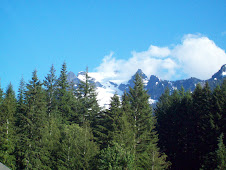
A bit of my view...
Wednesday, January 13, 2010


Thursday, January 7, 2010
Feeling Better and Planning Plans
It's been a while since I've posted, but I had to kick an amazingly awful sinus infection, while somehow making it through all my shifts at work. This also resulted in the worst headache and lamest New Years Eve ever, but I feel much better now that I've finished my second antibiotic. I took the youngest to the clinic yesterday, and requested a z-pack for him, too. He seems to be kicking it now as well. The one good thing about being sick is that I was able to get through 300+ pages of my new Steven King novel, "Under the Dome," and it is turning out to be a classic King page-turner. I'm sad I have to put it aside for school now.
I've been to two of my three classes this quarter, and am going to the third tonight. On Mondays I have Environmental Dispute Resolution, which looks interesting, if he can keep us on topic. Monday night's class continued the complaints from certain Poulsbo students (who are in their 50's and going for their second Bachelor's mind you) about the Discussion Board on Blackboard from last quarter. Our class is in a much smaller teleconference room this quarter, so we had some complaints of our own about those students with our mute button on. Hopefully the park ranger can reign things in next week.
Last night I attended my Environmental Economics class with the great surprise of an on-campus professor! Dr. Burke lives in Bellingham, so she'll be at our campus most of the quarter. And while we silently deal with the technology snafus with the professors on the other campuses, those campuses had nothing but complaints last night about our technology issues. Other than that, we had a great review of Microeconomics, which I remembered all of thanks to the most awesome Professor Hu.
I'm really interested in learning how to place dollar value on non-market items such as clean air and water, so I can help the Darrington town council clean up our dirty air reputation. It's too beautiful around here to have the status of the dirtiest air in the state! I think Dr. Burke will do a great job getting us to that point. She reminds me of Dr. Pape, my Biology professor and advisor at EvCC.
A lot of younger people didn't like her, and didn't do well in her class, but if you already had a good work ethic, you could learn a lot from her and the class. She inspired me to continue my original Environmental Science degree and scrap pharmacy. I am so happy that I did, because that led me to Environmental Planning and Policy. Tonight is Intro to Planning with another one of my first quarter professors, Gail, and once again she has blessed us with not requiring a text book and posting all of her lecture power points. We love you Gail!
The Great Cat Wars seem to be easing up at our house, and both new cats are easing into their new homes, while our three other cats seem to be comfortable around them, at times. The youngest's cat, which he has named Meg, seems to be growing her fur back. She had shed a lot at the shelter. And the old grandma cat we adopted (which already had the boy name of Teddie), no longer primarily dwells under our bed. She can use her front legs to climb up to many places, and seems to be able to get away from the little devil-dog just fine.
Juggling our schedules should be interesting for this month as all three kids are playing basketball, and I'm back at school. So forgive me beforehand if I forget something, the calendar looks like a clusterbomb hit it.
I've been to two of my three classes this quarter, and am going to the third tonight. On Mondays I have Environmental Dispute Resolution, which looks interesting, if he can keep us on topic. Monday night's class continued the complaints from certain Poulsbo students (who are in their 50's and going for their second Bachelor's mind you) about the Discussion Board on Blackboard from last quarter. Our class is in a much smaller teleconference room this quarter, so we had some complaints of our own about those students with our mute button on. Hopefully the park ranger can reign things in next week.
Last night I attended my Environmental Economics class with the great surprise of an on-campus professor! Dr. Burke lives in Bellingham, so she'll be at our campus most of the quarter. And while we silently deal with the technology snafus with the professors on the other campuses, those campuses had nothing but complaints last night about our technology issues. Other than that, we had a great review of Microeconomics, which I remembered all of thanks to the most awesome Professor Hu.
I'm really interested in learning how to place dollar value on non-market items such as clean air and water, so I can help the Darrington town council clean up our dirty air reputation. It's too beautiful around here to have the status of the dirtiest air in the state! I think Dr. Burke will do a great job getting us to that point. She reminds me of Dr. Pape, my Biology professor and advisor at EvCC.
A lot of younger people didn't like her, and didn't do well in her class, but if you already had a good work ethic, you could learn a lot from her and the class. She inspired me to continue my original Environmental Science degree and scrap pharmacy. I am so happy that I did, because that led me to Environmental Planning and Policy. Tonight is Intro to Planning with another one of my first quarter professors, Gail, and once again she has blessed us with not requiring a text book and posting all of her lecture power points. We love you Gail!
The Great Cat Wars seem to be easing up at our house, and both new cats are easing into their new homes, while our three other cats seem to be comfortable around them, at times. The youngest's cat, which he has named Meg, seems to be growing her fur back. She had shed a lot at the shelter. And the old grandma cat we adopted (which already had the boy name of Teddie), no longer primarily dwells under our bed. She can use her front legs to climb up to many places, and seems to be able to get away from the little devil-dog just fine.
Juggling our schedules should be interesting for this month as all three kids are playing basketball, and I'm back at school. So forgive me beforehand if I forget something, the calendar looks like a clusterbomb hit it.
Tuesday, December 29, 2009
Feeling Old and Boring
Life feels as if it is at a standstill around here. Even though there is always laundry or some other chore to do, it has just been us and the pets since the 26th. One benefit of no kids at home for days is the concept of leftovers for dinner. I made a huge Christmas dinner, and even though the chicken was gone that night, we've been pairing the sides with my mom's leftover ham, and have been eating quite well.
To our surprise though, the youngest wanted to come home from his dad's last night, and the step-son called last night wanting to come home today. It's kind of weird, but we've always told them, we're just a phone call away and will always pick you up. I think they are more vocal now that we both recently began defending their right not to go to BioParents houses. It's one thing when they are young kids, but they all have their own lives and friends now that they are older. Both the hubby and I were forced into visitations as teens, so we've begun letting them make their own decisions about them. We still feel they should visit, but if their schedule only allows a day rather than a weekend, well we've decided to be firm and have their backs if needed.
I continued my pattern of watching old movies throughout my Winter Break, with my new Monty Python Holy Trilogy dvd's over the weekend. Since the break I've watched the original "The Day the Earth Stood Still," the original "Taking of Pelham 1,2,3," "Elmer Gentry," and many other oldies including countless Christmas classics like George C. Scott's "A Christmas Carol," "A Christmas Story," and of course "It's a Wonderful Life." I know it sounds boring, but sometimes I'm overwhelmed by all of the special effects, and want a classic story. The hubby also got me the new books from Steven King and Michael Crichton (yes, I know he's dead, tired of hearing about it) for Christmas. I've finally got some decent fiction to read.
I know what you're thinking - nothing about the World Climate Talks in Copenhagen? No, not really. I lost hope in them when we were following the pre-political preparation in class. Our politicians, for some reason think that they can dictate policies to us and the world. But here's a clue - people react best to peer pressure, and if you want to make a real change, you need to start small and work from the bottom up.
World talks will get no where until we can figure things out at home, and that includes your city and county. I have more hope for the Puget Sound Partnership than the Kyoto Protocol. I have some nasty words regarding the new developing country fund, since we need a major infrastucture overhaul at home, but I don't want to sound too cynical. And that's all I'm going to say about that.
I'm not ready for next quarter yet, as the Amazon textbook order will be placed tonight. I feel like I need one more week off, but alas class starts on Monday. I do have a lead on a SnoCo parks internship, though. They are planning on making major changes and restorations at my old stomping ground out at Kayak Point County Park, and the Parks Department is requesting a couple of interns. I would love to work out there again, but I hope they don't get a new entrance sign. That's some great maitenance aid craftsmanship from 1996, I mean the routing and paint job is amazing! Sunshine and I worked for hours on it. :) I'll keep you posted on the new opportunity.
To our surprise though, the youngest wanted to come home from his dad's last night, and the step-son called last night wanting to come home today. It's kind of weird, but we've always told them, we're just a phone call away and will always pick you up. I think they are more vocal now that we both recently began defending their right not to go to BioParents houses. It's one thing when they are young kids, but they all have their own lives and friends now that they are older. Both the hubby and I were forced into visitations as teens, so we've begun letting them make their own decisions about them. We still feel they should visit, but if their schedule only allows a day rather than a weekend, well we've decided to be firm and have their backs if needed.
I continued my pattern of watching old movies throughout my Winter Break, with my new Monty Python Holy Trilogy dvd's over the weekend. Since the break I've watched the original "The Day the Earth Stood Still," the original "Taking of Pelham 1,2,3," "Elmer Gentry," and many other oldies including countless Christmas classics like George C. Scott's "A Christmas Carol," "A Christmas Story," and of course "It's a Wonderful Life." I know it sounds boring, but sometimes I'm overwhelmed by all of the special effects, and want a classic story. The hubby also got me the new books from Steven King and Michael Crichton (yes, I know he's dead, tired of hearing about it) for Christmas. I've finally got some decent fiction to read.
I know what you're thinking - nothing about the World Climate Talks in Copenhagen? No, not really. I lost hope in them when we were following the pre-political preparation in class. Our politicians, for some reason think that they can dictate policies to us and the world. But here's a clue - people react best to peer pressure, and if you want to make a real change, you need to start small and work from the bottom up.
World talks will get no where until we can figure things out at home, and that includes your city and county. I have more hope for the Puget Sound Partnership than the Kyoto Protocol. I have some nasty words regarding the new developing country fund, since we need a major infrastucture overhaul at home, but I don't want to sound too cynical. And that's all I'm going to say about that.
I'm not ready for next quarter yet, as the Amazon textbook order will be placed tonight. I feel like I need one more week off, but alas class starts on Monday. I do have a lead on a SnoCo parks internship, though. They are planning on making major changes and restorations at my old stomping ground out at Kayak Point County Park, and the Parks Department is requesting a couple of interns. I would love to work out there again, but I hope they don't get a new entrance sign. That's some great maitenance aid craftsmanship from 1996, I mean the routing and paint job is amazing! Sunshine and I worked for hours on it. :) I'll keep you posted on the new opportunity.
Thursday, December 17, 2009
Watch What You Say About Old People
I got my final grades today from WWU, and did much better than I thought - 3.56 baby! The most surprising grade was my US Environmental Policy grade. I got a B+ or A- on all of my policy briefs, including a B+ on my final Drug Take-back paper and presentation. Class participation must have bumped up my grade to an A-, so maybe I should talk some more in her class next quarter for an A. It's still very strange to communicate through classroom internet and video technology.
Next quarter should be interesting, as I don't have a science class for an easy B. No, my science class is Environmental Economics, considered a mathematical science. Oh boy - hopefully Uncle D will be helping me again. I never thought in my life that I would end up taking 3 Economics classes.
On the pharmacy front, I correctly identified a tablet my cousin found in his couch in Mississippi over the phone. My sister called me on Saturday as I was leaving work. She was spending a few days at his house, and they had found the tablet earlier that day. My cousin has young kids and teenagers, so he was concerned on both fronts. She described it as a small and yellow tablet with a 7 on one side and nothing on the other.
Before I go any further, I have to explain my family history a little. I was the only product of my parent's second marriages, who had teenagers that were the same age from previous marriages. My aunt had 3 kids that were spaced years apart, so on her side, I have a cousin that is the same age as my oldest siblings, and a cousin that is only 6 years older than me. Okay enough of dysfunctional brady bunch.
Anyway, I told my sister that it sounded like an 81 mg aspirin, "the kind that we give old people." So my sister repeats to my cousin, "she said it's an aspirin, an old person aspirin." To which my cousin replies, "I have aspirin, but I'm not an old person." Then he kept interjecting old comments into the background while I told my sister I would look it up at work the next day.
About an hour later, I got a text message from my sister, that it was our aunt's aspirin that she had lost and couldn't find. And my aunt, bless her heart, is kind of old. Then on the next line, "but Wayne still doesn't appreciate you calling him old." Never gonna live that one down.
Next quarter should be interesting, as I don't have a science class for an easy B. No, my science class is Environmental Economics, considered a mathematical science. Oh boy - hopefully Uncle D will be helping me again. I never thought in my life that I would end up taking 3 Economics classes.
On the pharmacy front, I correctly identified a tablet my cousin found in his couch in Mississippi over the phone. My sister called me on Saturday as I was leaving work. She was spending a few days at his house, and they had found the tablet earlier that day. My cousin has young kids and teenagers, so he was concerned on both fronts. She described it as a small and yellow tablet with a 7 on one side and nothing on the other.
Before I go any further, I have to explain my family history a little. I was the only product of my parent's second marriages, who had teenagers that were the same age from previous marriages. My aunt had 3 kids that were spaced years apart, so on her side, I have a cousin that is the same age as my oldest siblings, and a cousin that is only 6 years older than me. Okay enough of dysfunctional brady bunch.
Anyway, I told my sister that it sounded like an 81 mg aspirin, "the kind that we give old people." So my sister repeats to my cousin, "she said it's an aspirin, an old person aspirin." To which my cousin replies, "I have aspirin, but I'm not an old person." Then he kept interjecting old comments into the background while I told my sister I would look it up at work the next day.
About an hour later, I got a text message from my sister, that it was our aunt's aspirin that she had lost and couldn't find. And my aunt, bless her heart, is kind of old. Then on the next line, "but Wayne still doesn't appreciate you calling him old." Never gonna live that one down.
Friday, November 27, 2009
Welcome to the Hotel Reptilia
So I was going to start this blog off sweet, and serious, but I just have to let everyone know I have a squatter wintering under my house. Three nights ago, I thought I heard a frog while I was reading, but the Hermit didn't hear a thing. He did take the opportunity to equate me to a cat-lady with all of my reptile yard statues, art and nick-nacks - ha ha so funny, now I hear them.
However, our Siamese, Fokker, would not leave the bathroom this morning. When I went in to investigate what el gato loco was up to, I caught him trying to remove the floor vent for the central heating system. I know that sounds weird, but the cat thinks he is our child and has hands. As I stood there, I heard the croaking again, only this time much louder. It was very much the call of a Western Toad, and if he wants to winter there, and can somehow get in and out, then go for it buddy.
We had a great Thanksgiving with the Hermit's family in Wenatchee yesterday. On the way there on Wednesday, I kept thinking of my friend Jen, and the long drives we would put in to hang out after her parents moved her to Mount Index (yes the mountain, not the town) in our Junior year of high school. We had fallen out of touch the last year and a half, since she went to the dark side and took a job in Boise with Supervalu/Albertsons. I'm sure most of you won't understand that, but the Hermit and I both left that company with a sour taste.
But Jen's a great gal, and has 2 great boys with her hubby. With me in school, and her in a new busy corporate job, we just lost touch. Well lo and behold I get home last night, sign onto Facebook, and there's Jen with a friend request! How random and great is that?!
In Wenatchee, the hubby was able to kick back and hang out with his aunt and cousins, which is something I've been trying to convince him to do for a while. After dinner yesterday, we all pulled out our cell phones and exchanged numbers, email, facebooks, etc, so he has no excuse to not get out and do something once in a while. He was also able to spend some quality time with his grandpa, who's Alzheimer's is progressing more rapidly than the Hermit thought.
It's such an ugly disease, and most relatives don't realize how fast detioration can be. I've lost all my biological grandparents, but am lucky to have Granny on my step-dad's side and Ruth on my step-mom's side still around, and the hubby's grandparents. Harold, my step-mom's dad recently passed away from Alzheimer's and Ruth was diagnosed right around the same time as the hubby's grandpa. It's so hard to see such bright people get so confused, and the frustration that happens on all sides.
I've always loved hanging out with blue-hairs. My paternal grandparents were 70 when I was born, and my grandpa used to golf-cart me around Sun City Center Florida to hang out with the other old guys when we would visit. My favorite customers are mostly older adults, and I love talking to them, no matter what they want to talk about. You can always get a good laugh, or learn something. So it was good to visit with his grandparents this week, and keep his grandpa company.
And speaking of blue-hairs, it was good to talk to my dad yesterday, too, (ha ha just kidding?). We got some good ideas for a family project next summer, and my siblings on Dad's side are gonna love it! Uncle D and Dad will get it as a present, and they will have the option of ordering their own. I've got to get to the Seattle Public Library to get some historical documentation, so I can put together an album of our old family photos from the teens, twenties and thirties. My great-grandpa was a prominent lawyer, lumber tycoon and Seattle downtown developer after the historic fire. I have pictures, but no stories. I also want to get some info from UW regarding my grandparents' pictures from their college years in the twenties, before they graduated and grandpa whisked grandma off to live in Hawaii.
And speaking of UW, I'm taking sides in the Apple Cup for the first time since I moved here 20 years ago. I really didn't care when I moved here, as I will always root for the Maryland Terrapins, but I've been trying to respect the Cougs since I've worked for my employer the last 8 years. But my grandpa was UW ROTC, in football and crew, and my grandma was one of the first women to receive a Master's from the UW Information Science School (or whatever they call Librarian School), and my step-siblings have been rooting for them for a lifetime. So here it goes - GO HUSKIES!
However, our Siamese, Fokker, would not leave the bathroom this morning. When I went in to investigate what el gato loco was up to, I caught him trying to remove the floor vent for the central heating system. I know that sounds weird, but the cat thinks he is our child and has hands. As I stood there, I heard the croaking again, only this time much louder. It was very much the call of a Western Toad, and if he wants to winter there, and can somehow get in and out, then go for it buddy.
We had a great Thanksgiving with the Hermit's family in Wenatchee yesterday. On the way there on Wednesday, I kept thinking of my friend Jen, and the long drives we would put in to hang out after her parents moved her to Mount Index (yes the mountain, not the town) in our Junior year of high school. We had fallen out of touch the last year and a half, since she went to the dark side and took a job in Boise with Supervalu/Albertsons. I'm sure most of you won't understand that, but the Hermit and I both left that company with a sour taste.
But Jen's a great gal, and has 2 great boys with her hubby. With me in school, and her in a new busy corporate job, we just lost touch. Well lo and behold I get home last night, sign onto Facebook, and there's Jen with a friend request! How random and great is that?!
In Wenatchee, the hubby was able to kick back and hang out with his aunt and cousins, which is something I've been trying to convince him to do for a while. After dinner yesterday, we all pulled out our cell phones and exchanged numbers, email, facebooks, etc, so he has no excuse to not get out and do something once in a while. He was also able to spend some quality time with his grandpa, who's Alzheimer's is progressing more rapidly than the Hermit thought.
It's such an ugly disease, and most relatives don't realize how fast detioration can be. I've lost all my biological grandparents, but am lucky to have Granny on my step-dad's side and Ruth on my step-mom's side still around, and the hubby's grandparents. Harold, my step-mom's dad recently passed away from Alzheimer's and Ruth was diagnosed right around the same time as the hubby's grandpa. It's so hard to see such bright people get so confused, and the frustration that happens on all sides.
I've always loved hanging out with blue-hairs. My paternal grandparents were 70 when I was born, and my grandpa used to golf-cart me around Sun City Center Florida to hang out with the other old guys when we would visit. My favorite customers are mostly older adults, and I love talking to them, no matter what they want to talk about. You can always get a good laugh, or learn something. So it was good to visit with his grandparents this week, and keep his grandpa company.
And speaking of blue-hairs, it was good to talk to my dad yesterday, too, (ha ha just kidding?). We got some good ideas for a family project next summer, and my siblings on Dad's side are gonna love it! Uncle D and Dad will get it as a present, and they will have the option of ordering their own. I've got to get to the Seattle Public Library to get some historical documentation, so I can put together an album of our old family photos from the teens, twenties and thirties. My great-grandpa was a prominent lawyer, lumber tycoon and Seattle downtown developer after the historic fire. I have pictures, but no stories. I also want to get some info from UW regarding my grandparents' pictures from their college years in the twenties, before they graduated and grandpa whisked grandma off to live in Hawaii.
And speaking of UW, I'm taking sides in the Apple Cup for the first time since I moved here 20 years ago. I really didn't care when I moved here, as I will always root for the Maryland Terrapins, but I've been trying to respect the Cougs since I've worked for my employer the last 8 years. But my grandpa was UW ROTC, in football and crew, and my grandma was one of the first women to receive a Master's from the UW Information Science School (or whatever they call Librarian School), and my step-siblings have been rooting for them for a lifetime. So here it goes - GO HUSKIES!
Tuesday, November 17, 2009
Go Army!
So I was doing my homework for my Senior Environmental Policy class (now that the power is back on) and ran across this article. The Army Corps of Engineers has officially adopted rising sea levels and climate change into all of their dike, levee and coastal projects across the country. It is refreshing to see that even though they may be keeping quiet on the public front, at least one branch of the government is being realistic when it comes to the next fifty years.
I really wonder how realistic they can be about New Orleans. I have an opportunity to visit New Orleans for a conference this spring, but I've always been against visiting and supporting a city below sea level. Maybe it's because I grew up at sea level on flat Delmarva, but hurricane devastation at sea level is amazingly powerful. On the other hand, if they do have some serious solutions for the city, that are ecologically friendly, then I would be interested in going to hear those. And there's always the reason that I love me some jazz - raggity, dirty, loud Bourbon Street jazz!
Of course the Army Corps of Engineers are instituting this policy to protect their own assets, but it's a good first step. And I'm glad it's the Army that is leading the change. My grandpa retired as a Major General in the Army, was a WWII veteran, and even testified before Congress as to why women should be allowed to become generals. Even though two of my brothers were Marines, I'm still Army biased, because Grandpa was just too cool. So here's to success and new solutions - Go Army!
I really wonder how realistic they can be about New Orleans. I have an opportunity to visit New Orleans for a conference this spring, but I've always been against visiting and supporting a city below sea level. Maybe it's because I grew up at sea level on flat Delmarva, but hurricane devastation at sea level is amazingly powerful. On the other hand, if they do have some serious solutions for the city, that are ecologically friendly, then I would be interested in going to hear those. And there's always the reason that I love me some jazz - raggity, dirty, loud Bourbon Street jazz!
Of course the Army Corps of Engineers are instituting this policy to protect their own assets, but it's a good first step. And I'm glad it's the Army that is leading the change. My grandpa retired as a Major General in the Army, was a WWII veteran, and even testified before Congress as to why women should be allowed to become generals. Even though two of my brothers were Marines, I'm still Army biased, because Grandpa was just too cool. So here's to success and new solutions - Go Army!
Monday, November 16, 2009
GMO Crops - A Dangerous Solution
Abstract: Ammonia based fertilizer application increased the food supply for many populations around the world, but its use over the last century has resulted in negative biological effects as serious as Global Warming. Some scientists suggest that Genetically Modified crops be planted and distributed world-wide to increase nitrogen fixation in the soil, nitrogen use by the plants, and reduce the need for ammonia-based fertilizers. GM crops are very controversial, however, and enough studies have not been done to establish their safety for humans and the environment. Many alternatives to GM crops are available, and farmers should be taught good farm management and organic farming practices.
Introduction
Since 1908, humans have been fixing nitrogen from the air into ammonia, which can be used to produce fertilizer for plants. In the US over eighty million tons of fertilizer is applied yearly, while only seventeen million tons of it is used by the plants to produce food. The rest is leached into stream systems and the ground water supply. The Green Revolution in the 1960’s which enhanced food crop growth around the world has caused its own disruption in the nitrogen cycle. The majority of these plants have lost fifty percent of their nitrogen use efficiency in the last fifty years. It also spread the agricultural practice of excessive fertilizer application throughout the world.
The seepage of unused ammonia-based nitrogen from the soil accumulates in rivers and ground water. Many rivers across the US are saturated with nitrogen, and can no longer perform the natural process of de-nitrification to restore it into safe atmospheric molecules. It also promotes algal blooms which can clog slow-moving streams and rivers, produce neurotoxins and toxic blooms, and have created over 400 oceanic dead zones worldwide. The dead zones have depleted oxygen levels, killing fish and marine life around the mouths of the world’s rivers.
Invasive species also seem to thrive and out-perform native species in riparian and estuarine habitats where nitrogen run-off is high. Scientists are predicting that the global use of nitrogen fertilizers on farmland to double by 2050 at 220 million tons per year. This is six times the safe threshold, and they recommend that nitrogen releases into the environment should be significantly slashed to 35 million tons. With the earth’s natural nitrogen process already saturated, the oceans are becoming acidified by nitrates and nitrites from fertilizer run-off. The same molecules in the air have created world- wide acid rain and combined with chlorine and fluorine in ozone depletion.
GMO Solution
Some scientists have suggested a second green revolution, where crops will be genetically modified to increase nitrogen fixation from the soil, and nitrogen usage within the plants. Genetically Modified Organisms are monitored by most countries around the world, and only some species have been approved for human consumption, but some are pushing for more studies to increase species modifications and increase their human market. On the molecular level, generally, one gene is cut and replaced by a synthetically designed gene selected to produce a wanted trait such as an insecticidal property, pesticide resistance or nitrogen fixation.
However, problems have already arisen in approved GMO crops, and in GMO practices in underdeveloped countries. In the US, pharmaceutical and chemical companies are involved in GM seed production, and lobby the Food and Drug Administration and Department of Agriculture heavily. There have been documentations of insecticidal resistance developed by targeted insect larvae across the US, and documentations of a transfer of herbicidal resistant transgenes from GM oilseed rape crop to the bacteria residing in the gut of honeybees.
In 2000, a livestock approved GM corn crop named Starlink, was accidentally shipped to a human corn processing plant where it went into the food supply as Taco Bell taco shells, Tostito corn chips, various corn flakes and corn syrups. The Bt toxin produced by the livestock corn resembles the molecules in baker’s yeast and some vegetables. Human allergic reactions were reported nation-wide, and large amounts of corn products were recalled.
Biologists, Conservationists, Organic gardeners, and Heritage Seed gardeners fear that GM crops threaten plant integrity and biodiversity. Since plants have polyploidy traits, organic gardeners and environmentalists are concerned that GM transgenes will be transferred to organic crops, producing food that may be lethal to beneficial insects, or that continues to produce toxins after harvesting. Heritage Gardeners feel transgene transfer can wipe out seed banks that are hundreds of years old, and biologists feel that pesticide resistant qualities can be transferred to weeds and invasive species.
In Africa, human rights groups and environmental groups claim that GM seed companies and African governments increase farmer poverty. While in areas such as the Valley of a Thousand Hills in South Africa where sustainable, organic farming is taught by environmental justice groups, and practiced by villages of farmers, other farmers are given free GM seeds from the South African Department of Agriculture. The organic farmers are able to generate and keep seeds from season to season, while GM farmers’ crops are usually sterile, or they are prohibited and prosecuted for reusing fertile seeds produced by GM crops. The GM farmers, however, must take loans from banks to pay for the insecticides and pesticides provided by the GM seed companies, and many lose their land to the banks because they spend too much on chemicals. Organic farmers, however have good soils and keep seed banks from year to year.
Ancestral Genes Model
AGM is another type of DNA Recombinant modification, however, botanists performing AGM studies claim it enhances conventional breeding methods. The link to conventional breeding is that only the crop’s ancestrally related plants are studied for wanted characteristics such as natural insect resistance, nitrogen usage, or nitrogen fixation. The crop is bred with its genetic relative and hybrid plants are bred to select for fertility qualities. Once fertile plants with the wanted trait are produced from the cross, DNA assays are run to find the genes responsible for the trait. Those genes are then cut, reproduced in bacterial hosts, and used in DNA Recombinant modifications to transfer those selected genes to the original crop.
GM modification is done with genes from bacteria, fungus, and non-related plant species, and usually focuses on one gene in the plant. Insects quickly evolve a resistance to the single gene modification, and single transgenes are more easily transferred to other plants. Since natural plant traits are usually multi-allele, insects do not overcome toxins in nature, and multi-alleles are less likely to be completely transferred to another plant species, especially if genes are used from only related plants.
Other Alternatives
Humans need to improve agricultural practices and farm management around the world, and especially in the agriculturally productive United States. The Ministry of Agriculture, Food and Rural Affairs of Ontario gives farmers a checklist of what they can do to improve nitrogen management practices:
1. Reduce total nitrogen loading – use available manure before purchasing off-farm sources
2. Prevent run-off from manure or other nutrient material – store manure properly until it is ready to be applied.
3. Manage fields to avoid excess nitrogen leaching.
-know soil types and where leaching will occur
-test nitrogen in soil and only match per crop needs
-split fertilizer applications
-practice crop rotation
-establish after-season cover crops to tie-up excess nitrogen in soil at the end of the growing season
4. Manage nutrient application –
-practice timely tilling and incorporate manure into soil
-avoid applying manure near surface water or on steep slopes
-keep application rates low
-establish buffers and erosion control to filter run-off before it enters surface water
Other ways to increase nitrogen fixation from the soil is to inoculate crop seeds or roots with nitrogen fixing rhizobacteria. These external bacteria increase surface area of roots, and fix nitrogen in soil into usable forms for the crop. During the off season, nitrogen-fixing soys and legumes can be planted as cover crop. The cover crop can be tilled just before flowering to maximize ammonia gain in the soil.
Introduction
Since 1908, humans have been fixing nitrogen from the air into ammonia, which can be used to produce fertilizer for plants. In the US over eighty million tons of fertilizer is applied yearly, while only seventeen million tons of it is used by the plants to produce food. The rest is leached into stream systems and the ground water supply. The Green Revolution in the 1960’s which enhanced food crop growth around the world has caused its own disruption in the nitrogen cycle. The majority of these plants have lost fifty percent of their nitrogen use efficiency in the last fifty years. It also spread the agricultural practice of excessive fertilizer application throughout the world.
The seepage of unused ammonia-based nitrogen from the soil accumulates in rivers and ground water. Many rivers across the US are saturated with nitrogen, and can no longer perform the natural process of de-nitrification to restore it into safe atmospheric molecules. It also promotes algal blooms which can clog slow-moving streams and rivers, produce neurotoxins and toxic blooms, and have created over 400 oceanic dead zones worldwide. The dead zones have depleted oxygen levels, killing fish and marine life around the mouths of the world’s rivers.
Invasive species also seem to thrive and out-perform native species in riparian and estuarine habitats where nitrogen run-off is high. Scientists are predicting that the global use of nitrogen fertilizers on farmland to double by 2050 at 220 million tons per year. This is six times the safe threshold, and they recommend that nitrogen releases into the environment should be significantly slashed to 35 million tons. With the earth’s natural nitrogen process already saturated, the oceans are becoming acidified by nitrates and nitrites from fertilizer run-off. The same molecules in the air have created world- wide acid rain and combined with chlorine and fluorine in ozone depletion.
GMO Solution
Some scientists have suggested a second green revolution, where crops will be genetically modified to increase nitrogen fixation from the soil, and nitrogen usage within the plants. Genetically Modified Organisms are monitored by most countries around the world, and only some species have been approved for human consumption, but some are pushing for more studies to increase species modifications and increase their human market. On the molecular level, generally, one gene is cut and replaced by a synthetically designed gene selected to produce a wanted trait such as an insecticidal property, pesticide resistance or nitrogen fixation.
However, problems have already arisen in approved GMO crops, and in GMO practices in underdeveloped countries. In the US, pharmaceutical and chemical companies are involved in GM seed production, and lobby the Food and Drug Administration and Department of Agriculture heavily. There have been documentations of insecticidal resistance developed by targeted insect larvae across the US, and documentations of a transfer of herbicidal resistant transgenes from GM oilseed rape crop to the bacteria residing in the gut of honeybees.
In 2000, a livestock approved GM corn crop named Starlink, was accidentally shipped to a human corn processing plant where it went into the food supply as Taco Bell taco shells, Tostito corn chips, various corn flakes and corn syrups. The Bt toxin produced by the livestock corn resembles the molecules in baker’s yeast and some vegetables. Human allergic reactions were reported nation-wide, and large amounts of corn products were recalled.
Biologists, Conservationists, Organic gardeners, and Heritage Seed gardeners fear that GM crops threaten plant integrity and biodiversity. Since plants have polyploidy traits, organic gardeners and environmentalists are concerned that GM transgenes will be transferred to organic crops, producing food that may be lethal to beneficial insects, or that continues to produce toxins after harvesting. Heritage Gardeners feel transgene transfer can wipe out seed banks that are hundreds of years old, and biologists feel that pesticide resistant qualities can be transferred to weeds and invasive species.
In Africa, human rights groups and environmental groups claim that GM seed companies and African governments increase farmer poverty. While in areas such as the Valley of a Thousand Hills in South Africa where sustainable, organic farming is taught by environmental justice groups, and practiced by villages of farmers, other farmers are given free GM seeds from the South African Department of Agriculture. The organic farmers are able to generate and keep seeds from season to season, while GM farmers’ crops are usually sterile, or they are prohibited and prosecuted for reusing fertile seeds produced by GM crops. The GM farmers, however, must take loans from banks to pay for the insecticides and pesticides provided by the GM seed companies, and many lose their land to the banks because they spend too much on chemicals. Organic farmers, however have good soils and keep seed banks from year to year.
Ancestral Genes Model
AGM is another type of DNA Recombinant modification, however, botanists performing AGM studies claim it enhances conventional breeding methods. The link to conventional breeding is that only the crop’s ancestrally related plants are studied for wanted characteristics such as natural insect resistance, nitrogen usage, or nitrogen fixation. The crop is bred with its genetic relative and hybrid plants are bred to select for fertility qualities. Once fertile plants with the wanted trait are produced from the cross, DNA assays are run to find the genes responsible for the trait. Those genes are then cut, reproduced in bacterial hosts, and used in DNA Recombinant modifications to transfer those selected genes to the original crop.
GM modification is done with genes from bacteria, fungus, and non-related plant species, and usually focuses on one gene in the plant. Insects quickly evolve a resistance to the single gene modification, and single transgenes are more easily transferred to other plants. Since natural plant traits are usually multi-allele, insects do not overcome toxins in nature, and multi-alleles are less likely to be completely transferred to another plant species, especially if genes are used from only related plants.
Other Alternatives
Humans need to improve agricultural practices and farm management around the world, and especially in the agriculturally productive United States. The Ministry of Agriculture, Food and Rural Affairs of Ontario gives farmers a checklist of what they can do to improve nitrogen management practices:
1. Reduce total nitrogen loading – use available manure before purchasing off-farm sources
2. Prevent run-off from manure or other nutrient material – store manure properly until it is ready to be applied.
3. Manage fields to avoid excess nitrogen leaching.
-know soil types and where leaching will occur
-test nitrogen in soil and only match per crop needs
-split fertilizer applications
-practice crop rotation
-establish after-season cover crops to tie-up excess nitrogen in soil at the end of the growing season
4. Manage nutrient application –
-practice timely tilling and incorporate manure into soil
-avoid applying manure near surface water or on steep slopes
-keep application rates low
-establish buffers and erosion control to filter run-off before it enters surface water
Other ways to increase nitrogen fixation from the soil is to inoculate crop seeds or roots with nitrogen fixing rhizobacteria. These external bacteria increase surface area of roots, and fix nitrogen in soil into usable forms for the crop. During the off season, nitrogen-fixing soys and legumes can be planted as cover crop. The cover crop can be tilled just before flowering to maximize ammonia gain in the soil.
Subscribe to:
Posts (Atom)


 Posts
Posts

